
IBM stock dropped sharply after the company warned that its second-quarter 2026 results would come in below Wall Street's expectations, with shares sliding as much as 18% before the market open. If you're asking "why is IBM stock down today," the short answer is a preliminary earnings warning tied to slower software and consulting revenue, not a scandal or a one-off event. Here's what actually happened, why it matters, and what to watch next.
Why Is IBM Stock Down Right Now?
IBM told investors its second-quarter revenue would land around $17.2 billion, only about 1% higher than a year earlier, with adjusted earnings near $2.93 per share, short of the $3.01 analysts had penciled in. GAAP earnings per share came in near $2.27, down roughly 2% year over year, while pretax margin slipped to about 14.4%.
Broken down by segment, software grew about 5%, consulting was essentially flat, and infrastructure revenue fell around 7%. CEO Arvind Krishna explained that clients redirected spending toward servers, storage, and memory in the final weeks of June to lock in hardware ahead of expected price increases, pulling budget away from software and consulting deals. Krishna also acknowledged that IBM's teams didn't move fast enough, and a number of large deals slipped past the quarter without closing.
That combination, a real revenue and earnings miss layered on top of a shift in how enterprise clients were spending, is what sent the stock tumbling well before IBM's official Q2 earnings call.
What Triggered the Decline: A Quick Timeline
Late June 2026: Enterprise clients begin shifting capital spending toward hardware purchases, anticipating tighter supply and higher prices on servers, storage, and memory.
Early July 2026: Several large software and consulting deals that IBM expected to close during the quarter get pushed out.
July 14, 2026: IBM issues a preliminary earnings warning ahead of its scheduled July 22 earnings call, disclosing the revenue and margin shortfall. Shares fall sharply in premarket trading.
This kind of early warning, sometimes called a negative pre-announcement, is a signal that management wanted to get ahead of the news rather than let it surprise investors on the official earnings date.
What Happened Earlier in 2026: The Q1 Earnings Beat That Still Sent Shares Lower
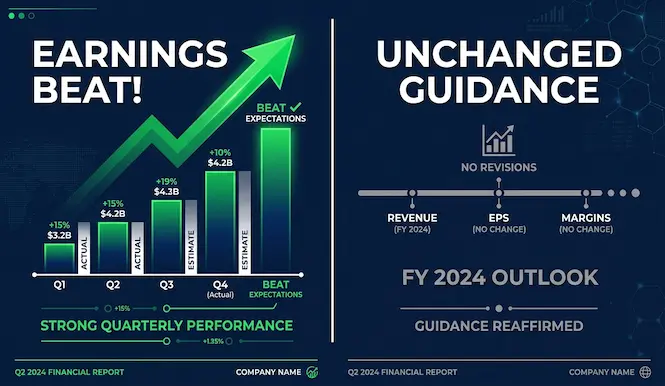
This isn't the first confusing stock reaction IBM has had this year. Back in April, IBM actually beat expectations on both the top and bottom line for the first quarter, revenue of $15.92 billion, up about 9.5% year over year, and adjusted earnings of $1.91 per share versus the roughly $1.81 to $1.82 analysts expected. Mainframe hardware revenue jumped an eye-catching 51% on strong demand for the newer z17 systems.
Even so, shares fell around 6% to 8% in after-hours trading. The reason: management left its full-year guidance unchanged instead of raising it, and investors had been hoping for an upgrade given the strong quarter. IBM did keep one long streak alive, declaring a dividend increase for the 31st consecutive year, alongside completing its roughly $11 billion Confluent acquisition ahead of schedule.
Put together, the Q1 reaction and the July warning tell a consistent story: IBM's stock has been trading on forward expectations and guidance credibility, not just on whether the company made money.
Why Enterprise Capital Spending Decisions Matter So Much to IBM
IBM primarily sells to large corporations, banks, healthcare systems, manufacturers, and government agencies, buyers with big budgets that get reallocated in a hurry when conditions change. The July warning is a textbook example: when clients worried about supply constraints and future price hikes on hardware, they pulled money away from software subscriptions and consulting engagements to secure physical infrastructure first.
That kind of budget reshuffling can happen even when overall enterprise IT spending is healthy. It's not necessarily a sign that businesses are cutting technology budgets altogether; it can simply mean they're prioritizing differently within the same pool of money. For long-term investors, the distinction matters: a timing shift in spending is a very different problem than a genuine slowdown in demand.
IBM's Full-Year 2026 Guidance: What's Still on the Table
Coming into 2026, IBM had guided to constant-currency revenue growth of more than 5% and roughly $1 billion of growth in free cash flow. Management reiterated that outlook after the Q1 beat in April. The July shortfall puts pressure on that guidance, and IBM's official Q2 earnings call on July 22 should clarify whether the full-year targets still hold or need to be revised down.
Watch for three things on that call: whether guidance is cut, how much of the shortfall management attributes to timing versus demand, and whether the delayed deals from Q2 are expected to close in Q3.
IBM Stock Price Performance in 2026
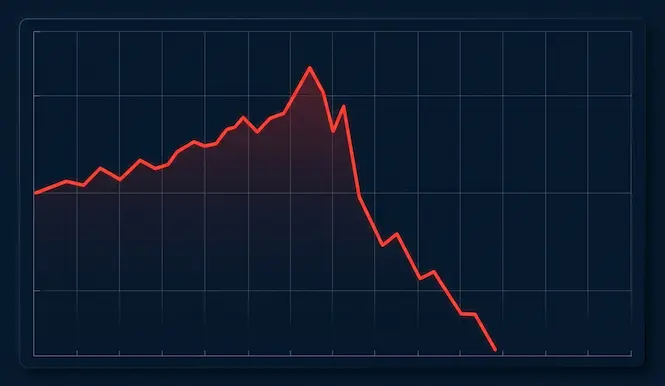
IBM shares had actually rallied strongly earlier in the year, up roughly 21% over the three months leading into the July warning, before giving much of that gain back. Year to date, the stock has swung between being roughly flat and down more than 20% at various points in 2026, generally lagging the S&P 500. That volatility underscores a pattern that's shown up all year: strong operating results haven't been enough on their own to keep the stock steady when guidance, margins, or spending patterns disappoint.
Rather than reacting to any single trading session, it's more useful to track the trend across quarters: revenue growth, free cash flow, dividend history, and progress converting AI and hybrid cloud investments into recurring revenue.
IBM's AI and Hybrid Cloud Strategy: The Bigger Picture
IBM has been betting heavily on enterprise AI rather than competing head-on in consumer AI. Recent moves include a partnership with OpenAI focused on AI-powered application security for enterprise clients, built on IBM's consulting platform, and a $5 billion open-source security initiative with Red Hat. IBM has also committed more than $10 billion to quantum computing over five years, aiming for a large-scale, fault-tolerant quantum computer by 2029.
The company has also been embedding AI directly into its mainframe hardware, allowing clients like banks to run real-time AI inference on transaction data, for example, screening fraud on every transaction rather than a small sample. Whether this AI backlog converts into recognized, recurring revenue is one of the central questions analysts are watching heading into the July 22 call.
Key metrics that reveal how the AI strategy is progressing:
| Metric | Why It Matters |
|---|---|
| Software growth rate | Shows whether AI and hybrid cloud tools are gaining paying customers |
| Consulting bookings | Reflects enterprise appetite for AI implementation projects |
| AI backlog conversion | Measures how much of IBM's AI pipeline is turning into real revenue |
| Mainframe (Z) hardware revenue | Signals demand strength following the z17 launch cycle |
| Free cash flow | Funds dividends, buybacks, and continued AI/quantum investment |
| Guidance revisions | Often moves the stock more than the reported numbers themselves |
Risks That Could Keep Pressure on IBM Stock
Execution slips. Krishna himself admitted the company didn't adapt quickly enough to the capex shift in Q2, and further stumbles on deal timing would raise real concerns.
Guidance cuts. If the July 22 call brings a lowered full-year outlook, the stock could see another leg down.
Intensifying competition. Microsoft, Amazon Web Services, Google Cloud, Oracle, and Salesforce are all competing for the same enterprise AI and cloud budgets.
Slower enterprise spending. A broader economic pullback could delay IT projects industry-wide, not just at IBM.
Unproven AI monetization. Investors want to see AI backlog turn into recognized revenue, not just bigger pipeline numbers.
Catalysts That Could Help IBM Stock Recover
Confirmation that delayed Q2 deals close in Q3. Continued mainframe strength following the z17 cycle. Clear evidence that AI backlog is converting to revenue. Maintained or raised full-year guidance on July 22. Continued dividend growth and share buybacks, which have supported the stock during past pullbacks.
Is IBM a Good Stock to Buy Right Now?
That depends on your goals and risk tolerance, and this isn't investment advice, just a framework for evaluating the situation. IBM tends to appeal to investors looking for dividend income (it has now raised its payout for 31 straight years), relatively lower volatility than many pure-play tech stocks, and direct exposure to enterprise AI and hybrid cloud adoption. Investors chasing faster revenue growth may still prefer other technology names.
Before making a decision, it's worth reviewing IBM's valuation relative to peers, the trend in free cash flow, debt levels, and, most importantly, what management says about guidance on the July 22 earnings call. For the source documents behind this article, IBM's own investor relations site and its SEC filings are the most reliable places to verify current numbers.
IBM vs. Other Major Technology Companies
| Company | Primary Strength |
|---|---|
| IBM | Enterprise AI, hybrid cloud, consulting, mainframe hardware |
| Microsoft | Cloud, AI, productivity software |
| Oracle | Enterprise database, cloud infrastructure |
| Amazon | Cloud infrastructure (AWS) |
| Google (Alphabet) | AI, cloud, advertising |
IBM's positioning is distinct: it competes almost entirely on enterprise and government contracts rather than consumer products, which tends to produce steadier, if slower, revenue growth.

Frequently Asked Questions
Why did IBM stock crash in July 2026?
IBM issued a preliminary warning ahead of its scheduled earnings call, disclosing that second-quarter revenue and earnings would fall short of Wall Street estimates. The shortfall was driven mainly by enterprise clients shifting spending toward hardware purchases and delayed software and consulting deals, sending shares down as much as 18% in premarket trading.
Why did IBM stock fall even after beating earnings in Q1 2026?
IBM topped both revenue and earnings estimates in the first quarter, but shares still fell because management kept its full-year guidance unchanged instead of raising it. Investors had been expecting an upgraded outlook given the strength of the quarter.
Is IBM a good stock to buy today?
IBM may suit investors looking for dividend income, relative stability, and exposure to enterprise AI and hybrid cloud growth. It may be less appealing to investors seeking rapid revenue expansion. Any decision should be based on your own financial goals, risk tolerance, and further research, not on a single article.
When is IBM's next earnings call?
IBM's official second-quarter 2026 earnings call is scheduled for July 22, 2026. The company already disclosed preliminary results on July 14 as part of an early warning about the quarter's shortfall.
Does IBM still pay a dividend, and is it growing?
Yes. IBM declared a quarterly dividend of $1.69 per share in 2026, marking the 31st consecutive year the company has raised its payout, a streak that has continued despite recent stock price volatility.
Does Warren Buffett still own IBM stock?
No. Berkshire Hathaway previously held a large IBM position but exited it years ago. Current institutional holdings can be checked through Berkshire Hathaway's latest SEC filings.
Is IBM bigger than Google?
No. Alphabet, Google's parent company, is substantially larger than IBM by both market capitalization and revenue. IBM remains a major player in enterprise AI, consulting, cybersecurity, and hybrid cloud, but it operates at a smaller scale than Alphabet.
What is IBM's full-year 2026 guidance now?
As of early 2026, IBM had guided to constant-currency revenue growth above 5% and roughly $1 billion of growth in free cash flow. Whether that guidance holds, given the second-quarter shortfall, should become clear on the July 22 earnings call.
Final Thoughts
IBM's stock moves in 2026 have followed a consistent pattern: the market is reacting less to whether IBM made money and more to whether results and guidance matched what was already priced in. A strong Q1 wasn't enough to lift the stock without a guidance raise, and a real Q2 shortfall, driven largely by a temporary shift in client spending toward hardware, sent shares down sharply even as IBM continues to invest heavily in AI, quantum computing, and hybrid cloud.
The next real test comes on July 22, when IBM's official Q2 earnings call should clarify whether the delayed deals are simply pushed to the next quarter or a sign of something more persistent. Until then, investors are left weighing a company with a 31-year dividend growth streak and a genuine AI and hybrid cloud opportunity against a stock that has struggled to hold onto gains all year.